
Waterloo Epoxy Flooring handles concrete floor repair in Waterloo, IA, serving surrounding cities including Evansdale, Cedar Falls, Waverly, Independence, Oelwein. After more than 20 years preparing slabs for coatings, we know that most floors need some repair first, and that the repairs decide how long the finished floor will look good.
Cracks, spalls, scaled patches and broken joints are mapped on the first visit, before we write a price. Each one is noted with the repair method, so the proposal shows exactly what will be fixed and how.
We are also honest about the floors that should not simply be patched. A slab that has heaved, sunk or broken apart needs replacing, and covering it with a coating only hides the problem until it returns.
Cracks in Concrete Floors
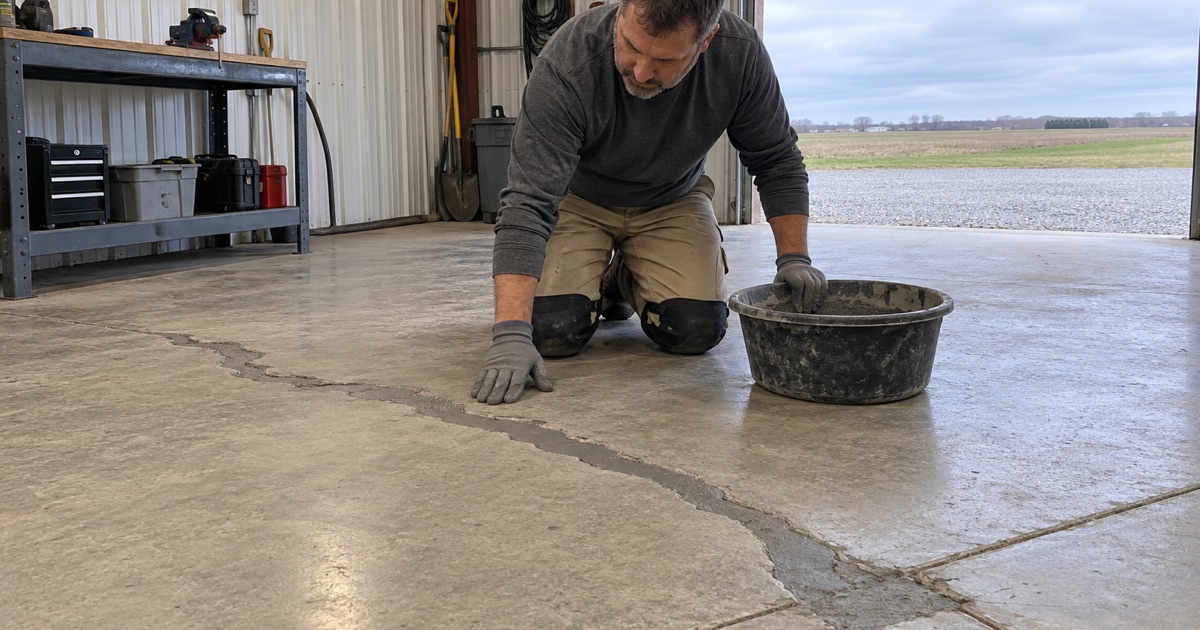
Shrinkage and Hairline Cracks
Almost every concrete floor cracks as it cures and shrinks. Fine shrinkage cracks are usually stable, and we repair them by routing them open slightly, cleaning them out and filling them with a rigid repair material. Once ground flush, they typically disappear under a coating.
Left unrepaired, even a fine crack can telegraph through a thin coating as a visible line. Repairing it first gives a smoother, more uniform finished floor.
Moving and Structural Cracks
Some cracks keep moving, opening and closing with temperature or ground movement. A rigid filler in a moving crack will often break loose again, so we use a more flexible material or treat the crack as a joint, and we note in writing that it may reappear.
Cracks with one side higher than the other, or ones that keep widening, can point to settlement or heaving under the slab. Those are not cosmetic, and we recommend having the cause looked at before the floor is coated.
Cracks That Leak Water
In basements, a crack that weeps water is a water problem, not a floor-finish problem. A coating will not stop it, and water pushing up behind a coating will lift it. We point those cracks out and recommend dealing with the drainage or foundation issue first.
Spalls, Pitting and Scaling
Spalled Edges and Chipped Joints
Spalling is when chunks of concrete break away, often along joint edges where wheels and forklifts hit them. We saw or grind back to sound concrete, then rebuild the edge with a repair mortar shaped to match the surrounding floor.
On commercial floors, rebuilt joint edges are usually paired with a semi-rigid joint filler. That supports the edges against traffic and keeps them from breaking down again.
Freeze-Thaw Scaling in Garages
Garage slabs here take a beating from brine and rock salt that ride in on tires from November through March. That salty water soaks into the surface, freezes and expands, and over time the top layer flakes off in patches. The worst damage is usually just inside the overhead door.
We grind scaled areas back to firm concrete and resurface them with a repair mortar before coating. A coating then keeps future brine on top of the slab instead of letting it back in.
Pitting and Popouts
Small craters from popouts, worn aggregate and old damage are filled with a patching compound and ground flush. Filled properly, they no longer collect dirt and water and they vanish under the finished floor.
Joints, Patches and Old Repairs
Control and Construction Joints
Control joints are cut to give a slab a place to crack neatly. When coating, we either fill and coat over them or keep them open and honor them with a flexible sealant, depending on whether the slab is still moving at those joints.
Previous Patches
Older floors often have patches from past plumbing, drain or slab work. Some are sound; others are crumbling or poorly bonded. We test each patch and remove and replace any that are loose, because a coating over a weak patch will fail at that spot.
Many of Waterloo’s older homes have basement and garage slabs patched several times over the decades. Sorting the good patches from the failing ones is a normal part of preparing those floors.
When Replacement Beats Repair
Heaved, Sunk or Broken Slabs
A slab that has lifted, dropped or broken into loose pieces cannot be fixed with filler. Settlement and frost heave move the concrete itself, and coating over it only covers the symptom.
In those cases we recommend replacing the affected section first. We then grind, test and coat the new and old concrete together once the new slab has cured enough to accept a coating.
New concrete holds a lot of water from the pour and needs time to release it. We test the new section for moisture before coating it, and if it is not ready, we schedule the coating for later rather than trap that water under the finish.
Deciding What Is Worth Saving
The decision between repair and replacement comes down to cost, appearance and how long the floor needs to last. A garage slab with a few cracks and a scaled patch near the door is almost always worth repairing; one with large heaved sections and broken pieces is usually not.
We put our recommendation in writing with the reasons, so you can compare it against a concrete contractor’s quote for replacement and decide with the full picture. Each reason is tied to something we found on the slab, not left as a verbal opinion.
Materials We Use for Concrete Repair
Rigid Fillers and Epoxy Mortars
Dormant cracks, pits and small spalls are filled with rigid epoxy or polyurea crack fillers and epoxy mortars that bond tightly to the surrounding concrete. They cure hard enough to grind flush, so the repair sits level with the slab and does not telegraph through the finished coating.
Flexible Sealants and Joint Fillers
Where a crack or joint is still moving, a rigid filler will simply crack again beside the repair. Semi-rigid joint fillers and flexible sealants are used there instead, chosen for the traffic the floor carries, from car tires in a garage to forklift wheels in a warehouse.
Cementitious Repair Mortars
Larger scaled areas and rebuilt edges are often resurfaced with polymer-modified cementitious repair mortars. These are troweled to shape, allowed to cure, and then ground and profiled like the rest of the slab before the coating system goes down.
- 20+ Years Coating Concrete
- Moisture Test in Every Scope
- Free Written Estimates