
Waterloo Epoxy Flooring provides concrete grinding and shot blasting in Waterloo, IA, serving surrounding cities including Evansdale, Cedar Falls, Waverly, Independence, Oelwein. For more than 20 years, grinding has been the first step of every floor we coat, because the bond between a coating and a slab is made or lost at the surface.
A bare slab is usually topped with a weak layer of cement paste called laitance, and many floors carry sealers, paint, oil and old coatings on top of that. A new coating sitting on any of those is only as strong as they are. Grinding cuts through to sound concrete and leaves a texture the next material can grip.
We grind for our own coatings, as the first stage of a polished floor, and for property owners or other trades who need a slab cleaned up and profiled before another floor goes down. Either way, the profile we leave is matched to what is going on next.
Diamond Grinding and Shot Blasting
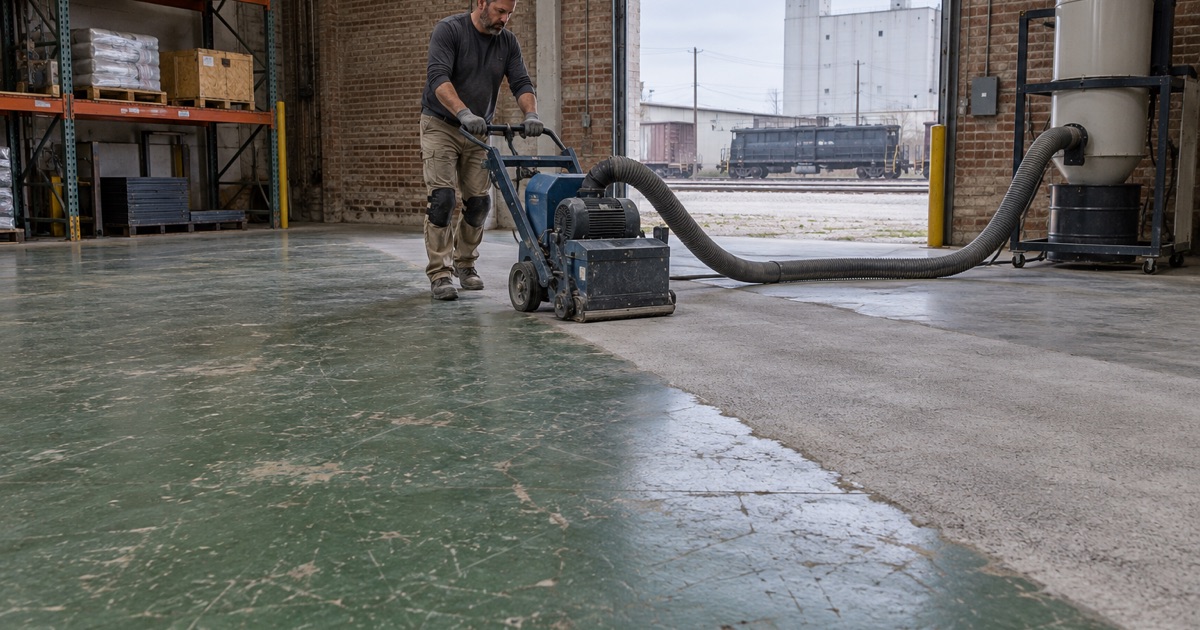
Diamond Grinding
Diamond grinders use rotating heads fitted with metal-bond diamond segments to abrade the surface. Coarse segments remove coatings and high spots quickly; finer segments smooth the scratch pattern. Grinding reaches close to walls and works well on garages, basements and most commercial floors.
Because the grinder controls how much material comes off, it can also flatten lips at joints and trowel ridges. That makes it the right tool where a floor needs leveling as well as profiling.
Shot Blasting
A shot blaster throws small steel shot at the slab and vacuums it back up, leaving a uniform textured surface. On large, open floors such as warehouses and plants, it profiles quickly and evenly, and it is especially good at preparing a slab for thicker systems that need an aggressive profile.
Shot blasting does not reach tight to walls, so we finish edges with a smaller grinder. The two tools are often used together on the same job.
Edge Work and Tight Spaces
Corners, door thresholds, stair landings and the area around posts and drains are prepared with hand grinders. Those spots are where many coatings start to peel, so they get the same profile as the open floor rather than a lighter touch.
Concrete Surface Profile, Explained
What the ICRI CSP Scale Means
The International Concrete Repair Institute rates surface texture on a scale from CSP 1, nearly flat, to CSP 10, very rough. Thin coatings and sealers need a light profile, while thick epoxy systems, urethane cement and overlays need a heavier one.
Coating manufacturers specify the profile their product needs, and we match it. Too smooth and the coating has nothing to hold; too rough and a thin coat will not cover the peaks.
Matching Profile to the System
A garage flake system usually goes over a moderate ground profile, while a heavy-duty plant floor may need a coarser blasted profile. Polishing starts with grinding but moves toward a smooth surface rather than a rough one.
The proposal states the method and the target profile, so you can see that the preparation fits the floor being installed. If the system changes during planning, the profile changes with it.
Removing Old Coatings and Contamination
Paint, Sealer and Failed Epoxy
Old paint, acrylic sealers and failed epoxy have to come off completely before a new coating goes down. Coarse diamonds or specialty tooling strip them back to bare concrete, and we check that no glossy patches remain before moving on.
Many older Waterloo homes and buildings have slabs that have been painted and patched several times. Taking all of that off can be the biggest part of the job, and we price it honestly rather than skimming the surface.
Oil, Grease and Stains
Oil soaks into concrete, especially in garages and shops. Grinding removes surface staining, but deep oil saturation can keep bleeding back and interfere with the bond, so heavily soaked areas may need cleaning, degreasing or a specialized primer.
Tile Adhesive and Asbestos Caution
Black mastic and older floor tiles sometimes contain asbestos. We do not grind an unknown adhesive until it has been tested, and if it needs abatement, a qualified contractor handles that before we prepare the slab.
Dust Control and Site Protection
Capturing Dust at the Machine
Every grinder and shot blaster we run is connected to an industrial vacuum that captures dust where it is made. That protects the people in the building and the finished surfaces nearby, and it keeps the slab clean for testing and coating.
We never sweep or rinse grinding dust toward a floor drain or storm inlet. It is collected and bagged for disposal, so it does not end up in the sewer or the stormwater system.
Working in Occupied Buildings
In homes and businesses, we seal doorways with plastic, protect HVAC returns, and plan the work so grinding happens when the space is least used. On commercial jobs we phase the work around shifts, with overnight and weekend windows when needed.
Noise is part of the job, too. Grinders and shot blasters are loud, so in a business with neighbors or an occupied office above we agree on working hours in advance and put them in writing alongside the dust-control plan.
Testing After the Grind
Why Moisture Testing Follows Grinding
Grinding opens the slab, which makes it the right moment to test it. An ASTM F2170 relative humidity probe or an ASTM F1869 calcium chloride test on freshly prepared concrete gives a reading the coating manufacturer will accept, and we record it before choosing a primer.
On garage and basement slabs, that test is part of the written scope before the price is final. A newer house is not automatically a drier garage, so we test whatever year the slab was poured.
Checking the Profile Before Coating
Before any coating goes down, we compare the prepared floor with the target profile, look for glossy spots where an old sealer survived, and vacuum the slab clean. Any area that did not open properly is ground again, because one missed patch is enough to start a peel.
Grinding for Other Floors
Before Carpet, Tile, Vinyl or Wood
Flooring installers often need old coatings, adhesive ridges and high spots removed before a new floor goes down. We grind the slab clean and flat to the level their product needs, leaving a surface that is ready for leveling compound or adhesive.
The First Stage of Polished Concrete
Polishing begins with the same coarse grinding we use for coatings, then continues through finer diamonds and a lithium silicate densifier. When polishing is the goal, the depth of the first grind also decides how much aggregate the finished floor will show, so it is planned before the first pass.
- 20+ Years Coating Concrete
- Moisture Test in Every Scope
- Free Written Estimates