Waterloo Epoxy Flooring installs metallic epoxy floors in Waterloo, IA, serving surrounding cities including Evansdale, Cedar Falls, Waverly, Independence, Oelwein. Metallic epoxy is the most artistic floor we put down, and after 20+ years of coating concrete we have learned that its beauty depends on two unglamorous things: a flat, well-prepared slab and an installer who controls the pour.
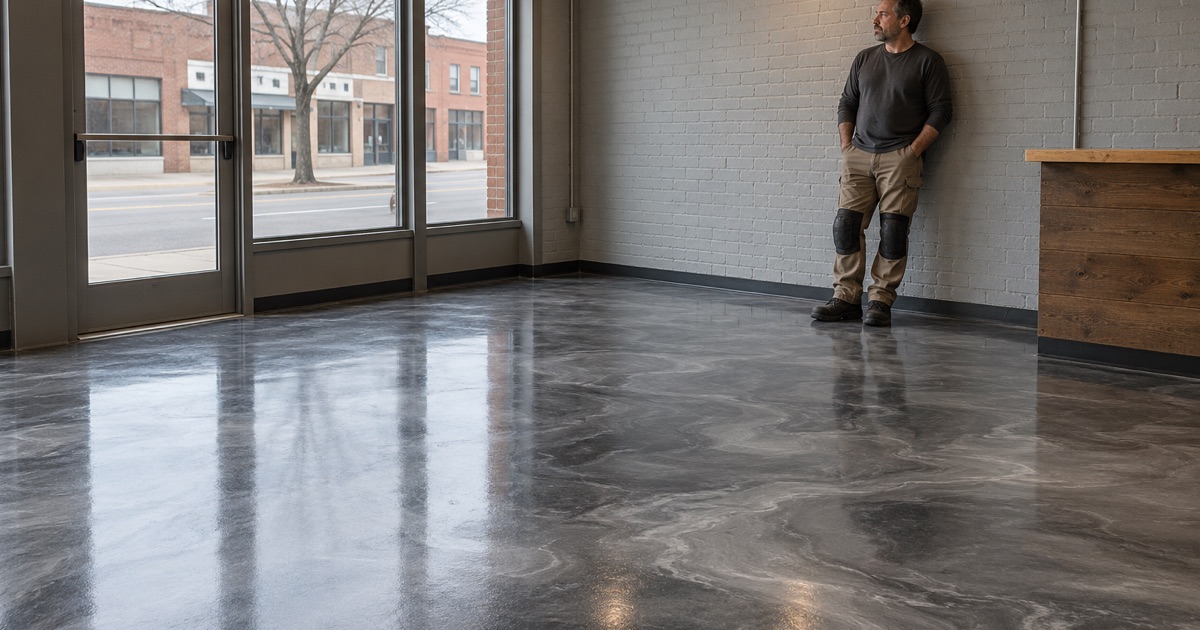
A metallic floor uses fine metallic pigments suspended in clear epoxy. As the coating is worked, the pigment moves, catches light and settles into swirls, veins and pools of color that look like marble, lava or polished stone. Every floor is a one-off, which is the appeal, and also why preparation and technique matter so much.
We agree on colors, movement and sheen with sample boards before any work starts. The proposal names the product line, each coat and the finished thickness, so the floor you get matches the system you were promised, even though the pattern itself is unique.
What Makes a Metallic Floor Work
A Flat, Sound Slab
Metallic epoxy is poured thicker than most coatings and flows to find its level. Any dip collects more pigment and any ridge shows less, so unevenness in the slab shows up in the pattern. We grind the floor flat with diamond tooling and fill low spots before the metallic coat goes down.
Cracks, spalls and old patches are mapped and repaired first. A crack that is still moving may reflect through over time, and we tell you that up front rather than promise a perfect surface over a slab that is still shifting.
Moisture Testing Under a Clear Coat
A moisture problem shows on any coating, but on a glossy metallic floor a blister or a cloudy spot is impossible to miss. We test the slab with ASTM F2170 relative humidity probes or ASTM F1869 calcium chloride tests before the price is final, on basement and garage slabs alike.
If a reading is above the coating’s limit, a moisture-mitigation primer goes down first, within its rated range. If the reading is too high for any system we would stand behind, we say so, and we suggest a floor finish that suits a damp slab better.
Base Coat, Metallic Layer and Topcoat
A typical metallic system starts with a primer and a tinted base coat that sets the background color. The metallic epoxy layer goes on next, worked with rollers, brushes, sprayers or air to create movement, then a clear topcoat seals it.
For that topcoat we often use a polyaspartic or polyurethane, which adds scratch and UV resistance over the softer epoxy. Each layer is written into the proposal so you can see exactly what the floor is built from.
Designing the Look
Choosing Colors and Movement
Metallic floors range from subtle single-color finishes with gentle movement to bold, high-contrast blends with deep veining. We bring sample boards to your space so you can see the colors under your own lighting, which changes the look more than most people expect.
We also talk about how much movement you want. Some customers want a calm floor that reads as one color from across the room; others want dramatic swirls. Both are achievable, but they are installed differently.
Gloss, Satin and Traction
Most metallic floors are finished in high gloss, which gives the deepest, most three-dimensional look. A satin topcoat softens the reflection and hides scratches and dust better, at some cost to depth.
Where floors may get wet, we add a fine clear grit to the topcoat for traction. It changes the feel more than the look and is worth it in entries, kitchens and near stairs.
Borders, Saw Cuts and Logos
Existing saw-cut control joints can be filled and coated over, used as design lines, or set off with a contrasting border. Businesses sometimes add a logo, laid out and masked before the topcoat seals it into the floor.
Joints deserve a decision before the pour. Filling and coating over a control joint gives an unbroken pattern, but if the slab moves at that joint the line can reappear as a hairline crack; keeping the joint open and using it as a border avoids that risk. We explain both options and let the slab’s history guide the choice.
Residential Metallic Epoxy Floors
Finished Basements
A metallic floor can make a basement feel like finished living space rather than a utility area. It suits rec rooms, home theaters and bars, where a striking floor becomes part of the design.
Basements need extra care before a clear coat goes down. We check the sump pit, the floor drain and the slab for signs of past water, because a coating does not stop seepage, and a basement that takes on water will damage a metallic floor as quickly as any other.
Garages and Home Workshops
Metallic epoxy can go in a garage, but brine and rock salt ride in on tires from November through March, and grit and hot tires wear a glossy finish faster. In a garage we always pair the metallic layer with a tough topcoat and talk honestly about whether a flake system might serve you better.
In a heated home workshop or a show garage where the car rarely moves, those concerns shrink and a metallic floor can be a standout. Dark, high-movement colors also hide minor wear better than light silver blends, which is worth weighing in any garage.
Odor and Re-Entry in the Home
Installing a metallic floor takes several days of coating and curing. We offer lower-odor products for basements and attached spaces as a comfort and re-entry choice, ventilate during the work, and give you realistic times for walking on and moving furniture back.
Cure also depends on temperature. Epoxy cures slowly in a cool basement, and if the slab is close to the dew point, moisture can leave a cloudy film called amine blush on the surface, which would be obvious under a clear metallic finish. We measure slab temperature and the dew point spread before each coat and adjust the schedule rather than rush it.
Commercial Metallic Epoxy Floors
Showrooms, Offices and Retail Spaces
Showrooms, salons, offices and boutiques choose metallic epoxy for a floor that makes an impression and is easy to clean. A seamless floor has no grout lines or carpet seams to collect dirt, and a light mop with a neutral cleaner keeps it looking fresh.
We schedule commercial work in phases, using overnight and weekend windows where needed. Because a metallic system takes several coats, we plan the sequence carefully so each area is closed for as short a time as possible.
Restaurants, Bars and Event Spaces
In dining rooms, bars and event spaces, a metallic floor can carry a brand’s colors and become part of the design. In front-of-house areas we add traction to the topcoat where spills are likely, and we keep the floor separate from kitchen areas that need a coved, food-safe system.
Keeping a Commercial Metallic Floor Looking New
Grit tracked in from parking lots is the biggest threat to a glossy floor. Walk-off mats at entrances, regular dust mopping and a pH-neutral cleaner keep the finish clear, and a topcoat can be refreshed later without redoing the metallic layer beneath.
We leave every commercial customer with written care guidance: which cleaners to use and avoid, how often to dust mop, and when to call us about a topcoat refresh. A floor that is cared for properly keeps its depth and shine for years, while one cleaned with harsh degreasers can dull in a single season.
Dust Control in an Occupied Building
Grinding a slab flat for a metallic floor produces fine concrete dust. Every grinder we run is connected to a vacuum that captures it at the machine, and we seal off the work area with plastic so dust does not drift into offices, stock or HVAC returns while the business stays open nearby.
- 20+ Years Coating Concrete
- Moisture Test in Every Scope
- Free Written Estimates