Waterloo Epoxy Flooring has spent more than 20 years on epoxy flooring in Waverly and across the Cedar Valley, and on a lower level near the river the first question we ask is not about color or flake size. It is about what the slab has already been through. A basement or garage floor that has sat under water, or that a previous owner patched and painted over, needs to be read before anyone prices a coating for it.
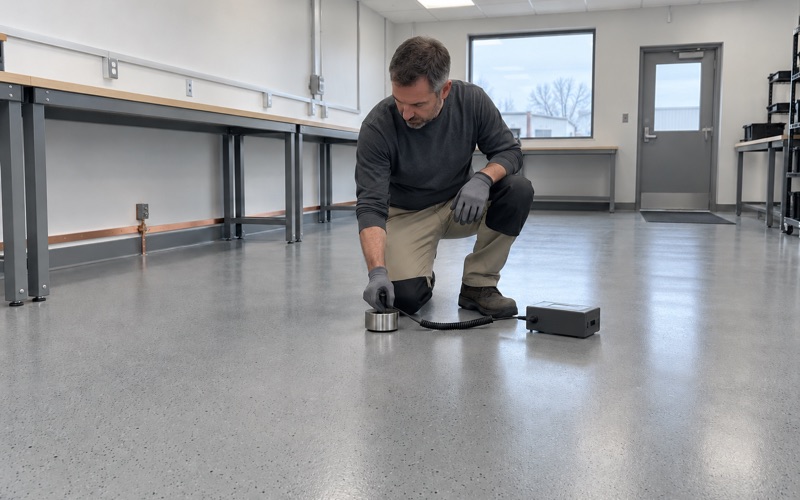
That reading starts with the concrete. We map cracks, spalls and old coatings, run a moisture test that goes into the written scope before the number is final, and tell you plainly when a floor needs repair or replacement rather than a coating. The proposal names the product line, the coat count and the finished thickness, so you can hold the finished floor up against the quote.
What follows is specific to this town: how the 2008 flood changed the way lower floors here should be finished, what the federal flood-materials guidance does and does not say about epoxy, and where city permits come into it.
June 2008 on the Cedar River in Waverly
In June 2008 the Cedar River rose to a record crest at Waverly. The published record for the river at Waverly is 19.33 feet on June 10, 2008, against a flood stage of 12 feet. A FEMA report quoted by the Iowa Economic Development Authority estimated that the flood damaged about 700 homes in Waverly, roughly 15 percent of the housing stock, along with 100 businesses and three of the eight schools in the Waverly-Shell Rock system.
Afterward, federal money reimbursed the city for acquiring and demolishing 74 residential properties north of downtown and in the northwest, southwest and southeast parts of the community, according to a 2009 release from Senator Grassley’s office. Those lots are gone. The houses that stayed are where the question of lower-floor finishes still lives.
What the water left behind on basement floors
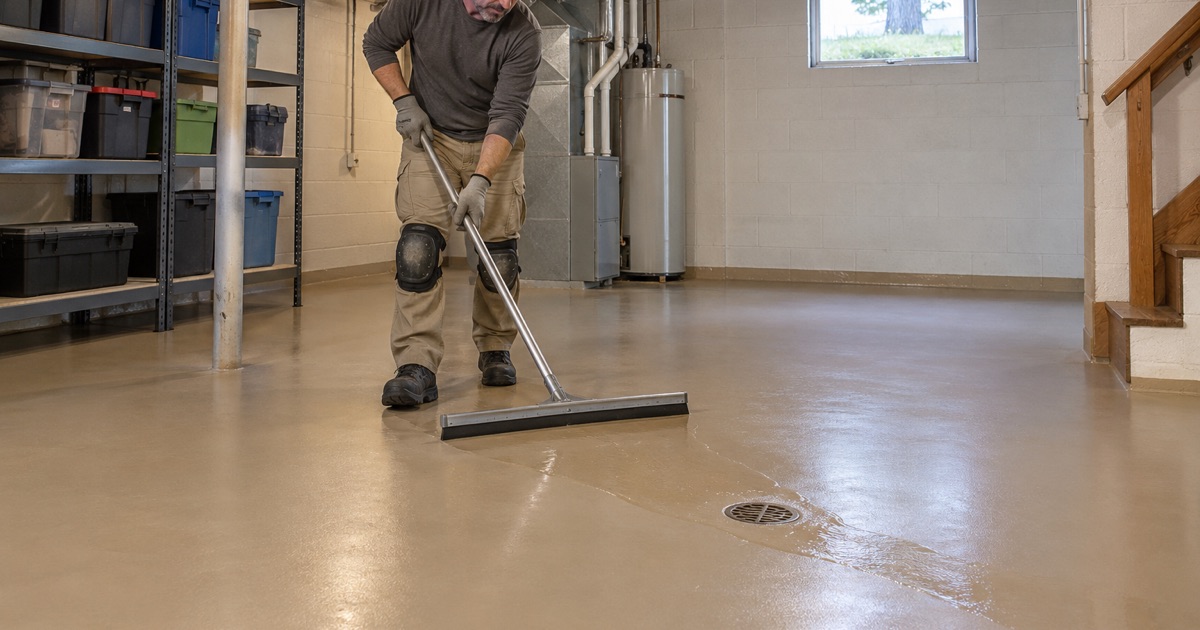
Most flooded basements in a river town are finished with the materials people normally choose: carpet over pad, sheet vinyl, laminate, sometimes engineered wood. Those finishes hold water against the slab, and they leave the house in a dumpster afterward. The concrete underneath usually survives, but it comes back with residue, efflorescence and whatever the water carried in.
Why the housing mix matters here
Census figures for Waverly count 4,111 housing units. Of those, 621 were built in 1939 or earlier, while 815 went up between 2010 and 2019. That spread means we see everything from old patched and painted basement slabs to newer pours with a vapor retarder underneath, and we test the slab whatever year the house was built, because a newer basement is not automatically a drier one.
Looking for epoxy-flooring closer to Independence? See Epoxy-Flooring in Independence.
What FEMA’s Flood-Materials Bulletin Says About Epoxy Floors
The National Flood Insurance Program publishes Technical Bulletin 2, Flood Damage-Resistant Materials Requirements. The current edition is dated January 2025 and replaces the 2008 version. Its Table 2 rates common finish materials for use below the base flood elevation, and formed-in-place epoxy flooring is listed as Acceptable, alongside formed-in-place polyurethane and terrazzo. Carpeting, linoleum and wood floor coverings, including engineered wood, solid wood and plastic laminate, are rated Unacceptable.
For a homeowner refinishing a lower level here, that table is one of the clearest pieces of guidance available. It explains why a seamless resin floor is a sensible choice for a basement in a mapped flood area, and why rolling out new carpet in the same room repeats the 2008 problem. The rating applies to the material class. FEMA does not rate brands, products or installers, and nothing about our work carries a FEMA endorsement.
Flood damage-resistant means cleanable, not watertight
The bulletin’s wording is precise. A flood damage-resistant material is one that can take direct contact with floodwater and be cleaned and put back into service afterward. That is what Acceptable means. It does not mean the floor keeps water out of the basement, holds back seepage through a wall, or changes anything about flood insurance or how high a new lowest floor has to sit.
We say this before any job is sold, because the gap between those two ideas is where disappointment comes from. An epoxy floor in a Waverly basement can come through a flood washable and serviceable. The water still gets in, the walls and mechanicals still take damage, and the cleanup still happens.
Combinations that trap water
Section 5.3 of the bulletin warns that combinations of materials that trap water or restrict drying can lead to unacceptable performance. On a floor, that is the case against laying a resin system over a slab that is already holding moisture. Before quoting, we check the sump pit and floor drain and look for signs of past water, because a coating does not stop seepage.
Then we measure. ASTM F2170 in-situ relative humidity probes or ASTM F1869 calcium chloride kits tell us what the slab is releasing, and where the readings call for it we specify a moisture-mitigation primer under the body coat rather than hoping the concrete dries out on its own.
Slabs That Took in Heating Oil or Floodwater Contaminants
The Acceptable ratings in Table 2 come with an important limit. Section 5.4 states that they do not take into account long-duration exposure to floodwaters, meaning two to three weeks, or exposure to contaminants. The bulletin goes further: a building finished with acceptable materials can still be rendered unacceptable for habitation when the floodwater carried petroleum-based products such as home heating oil.
That matters in a river town where a flood moves whatever is stored at floor level. Concrete is porous. A slab that sat in water carrying heating oil or similar products can hold that contamination after the surface has been scrubbed clean.
Oil in the slab is a bonding problem too
Apart from the habitability question, which is not ours to settle, an oil-soaked slab is a slab a coating will not bond to. Epoxy depends on a clean, open surface. Oil working up from inside the concrete undercuts adhesion from beneath, and the result is peeling and blistering that no topcoat will fix. On a floor with that kind of history, we will not put a coating down until the contamination has been tested and dealt with.
How we read a slab with a flood history
Our first visit to a basement with a flood history covers more than square footage. We look for staining, odor and dark patches that stay damp, map cracks and failed patches, and note old paint or coatings that would have to come off. Where contamination is suspected, testing and decontamination come first, and that may mean another specialist before we return.
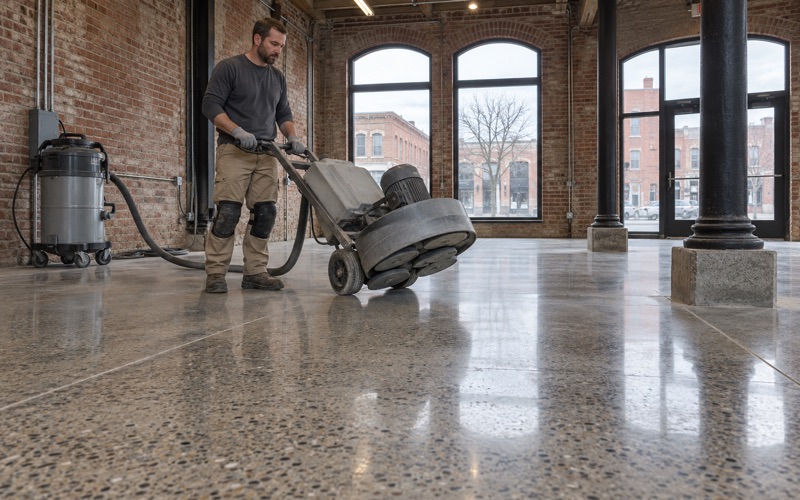
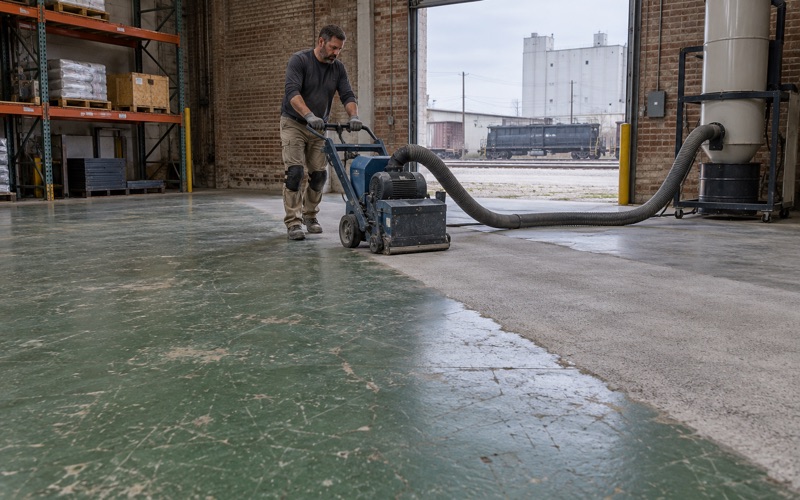
When the slab is ready, we open it with a diamond grinder or a shot blaster to an ICRI concrete surface profile the primer can grip, never an acid etch. Grinding dust is captured at the machine with a vacuum rather than rinsed toward the floor drain, which in a basement is the last place it should go.
Flood Plain Permits, the FIRM and Finish Work
Waverly’s building code is Chapter 90 of the city code. The version dated July 18, 2025 adopts the 2024 International Building Code and the 2024 International Residential Code, and its amendment to the IRC climate table names the flood hazard map as the FIRM dated January 29, 2021, plus FEMA authorized map amendments. If you want to know whether a property sits in a mapped A or AE zone, that map is the starting point.
When a floor coating needs a permit
Chapter 90.4 lists work exempt from a building permit, and the list includes painting, papering, tiling, carpeting and similar finish work. Coating the floor of an existing basement or garage falls in that category. The exemption covers the building permit, though, and it does not set aside the city’s flood plain standards.
Flood plain development and substantial improvement
The City of Waverly Community Development Office enforces standards for development in the high-risk flood hazard areas and handles flood plain development permits for A and AE zones. Its flood plain page states that new or substantially improved structures in those zones need the lowest floor, including basements, elevated at least one foot above the 100-year flood level. The detailed rules sit in Zoning Section 102.
A floor coating does nothing toward those elevation standards. Where a coating is one piece of a larger remodel in a mapped zone, the larger project is what the Community Development Office will look at, and that conversation belongs with the city before work starts. We will tell you when a project looks like it is heading into that territory.
Choosing a system for a Waverly lower level
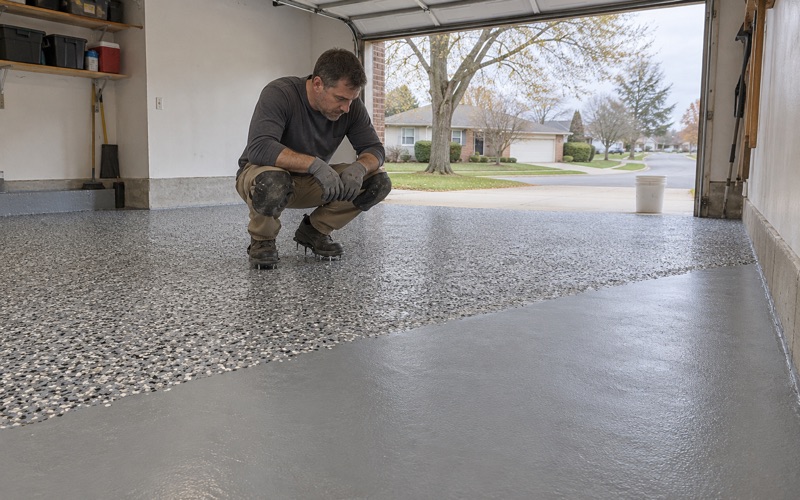
For basements, we usually specify a 100% solids epoxy body coat, with a quartz or vinyl flake broadcast where texture is wanted and a polyaspartic or urethane topcoat for wear. Low-odor products are available for basements and attached garages as a comfort and re-entry choice. Cure schedules follow slab temperature and dew point rather than the calendar, and the warranty conversation names moisture vapor transmission and hydrostatic pressure as exclusions before anything is signed.
- 20+ Years Coating Concrete
- Moisture Test in Every Scope
- Free Written Estimates